
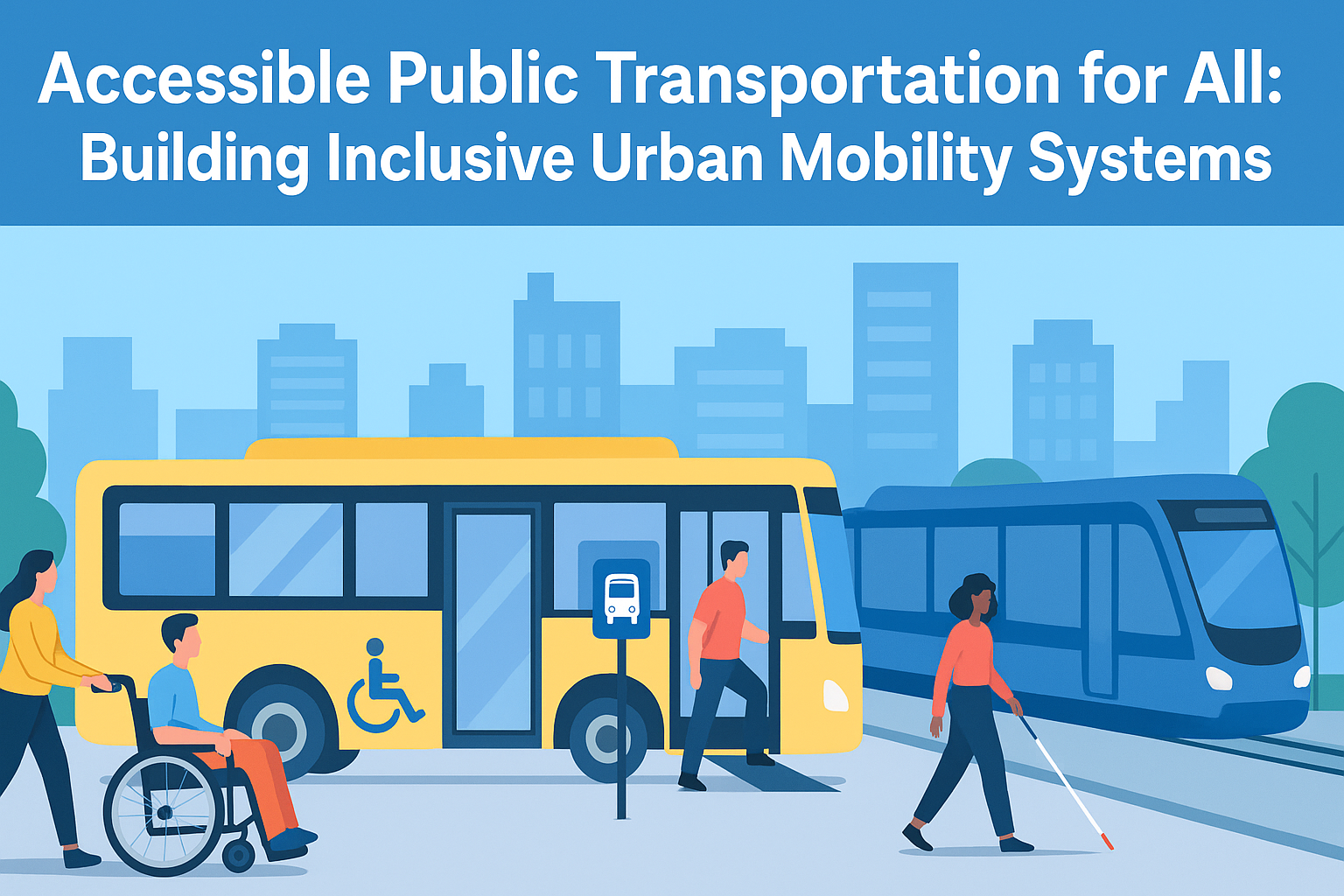
Discover how accessible public transportation transforms cities by creating inclusive mobility solutions for people with disabilities, elderly citizens, and families. Learn about safety standards, design principles, and implementation strategies for universal urban transit systems.
Introduction
Public transportation serves as the backbone of modern urban communities, connecting people to employment opportunities, educational institutions, healthcare services, and social activities. However, for millions of individuals worldwide, traditional transit systems present insurmountable barriers that exclude them from full participation in community life. Accessible public transportation represents more than just a convenience—it embodies the fundamental principle that every person deserves equal access to mobility and the opportunities that movement provides.
The concept of accessible public transportation extends beyond simple wheelchair ramps or designated seating areas. It encompasses a comprehensive approach to transit design that considers the diverse needs of all community members, including individuals with physical disabilities, sensory impairments, cognitive differences, elderly passengers, parents with strollers, and anyone who may face mobility challenges. This holistic perspective transforms public transportation from a basic service into a powerful tool for social inclusion and economic empowerment.
The Critical Importance of Accessible Public Transportation
Social Equity and Human Rights
Accessible public transportation fundamentally addresses issues of social equity and human rights. When transit systems exclude individuals based on their physical abilities or accessibility needs, they perpetuate systemic discrimination and limit opportunities for full community participation. The United Nations Convention on the Rights of Persons with Disabilities explicitly recognizes transportation accessibility as a fundamental right, emphasizing that states must ensure equal access to transportation systems for all citizens.
Research demonstrates that improved transportation accessibility directly correlates with increased employment rates among people with disabilities. When individuals can reliably access public transportation, they gain independence in traveling to job interviews, maintaining employment, and pursuing career advancement opportunities. This economic empowerment benefits not only individuals but entire communities through increased tax revenue, reduced social service costs, and enhanced economic productivity.
Economic Benefits and Community Development
Accessible public transportation generates significant economic benefits that extend throughout entire metropolitan areas. Cities with comprehensive accessibility features attract businesses seeking diverse talent pools and demonstrate commitment to inclusive practices. These communities often experience increased tourism revenue as accessible transportation systems welcome visitors with diverse mobility needs.
Property values near accessible transit stations typically appreciate faster than areas with limited accessibility features. This phenomenon, known as accessibility premium, reflects the market’s recognition that transportation access increases quality of life and economic opportunities for residents. Additionally, businesses located near accessible transit corridors benefit from expanded customer bases and improved employee retention rates.
Environmental Sustainability and Urban Planning
Accessible public transportation supports environmental sustainability by encouraging broader transit adoption across diverse populations. When systems accommodate all users effectively, they reduce overall vehicle dependency and associated carbon emissions. This environmental benefit multiplies as accessible design often incorporates energy-efficient technologies and sustainable construction materials.
Urban planners increasingly recognize that accessible transportation infrastructure creates more livable communities for everyone. Features designed for accessibility—such as level boarding platforms, clear wayfinding systems, and comfortable waiting areas—enhance the experience for all passengers while reducing system maintenance costs and operational complexity.
Core Objectives of Accessible Transportation Systems
Universal Design Principles
The primary objective of accessible public transportation involves implementing universal design principles that create systems usable by people with the widest range of abilities and circumstances. Universal design goes beyond meeting minimum compliance requirements to anticipate and accommodate diverse user needs from the initial planning stages.
Effective universal design in transportation considers multiple accessibility dimensions simultaneously. Physical accessibility ensures that individuals using wheelchairs, mobility devices, or experiencing mobility limitations can navigate stations, board vehicles, and travel safely. Sensory accessibility addresses the needs of passengers with visual or hearing impairments through tactile indicators, audio announcements, visual displays, and intuitive wayfinding systems.
Cognitive accessibility represents an often-overlooked but crucial design consideration. Clear signage, consistent layouts, predictable service patterns, and simplified fare systems help passengers with cognitive differences, learning disabilities, or those unfamiliar with the transit system navigate confidently. These features also benefit tourists, occasional users, and anyone experiencing stress or time pressure.
Seamless Integration and Connectivity
Accessible transportation systems aim to create seamless connectivity between different modes of transportation and community destinations. This objective requires coordination between bus systems, rail networks, paratransit services, and pedestrian infrastructure to ensure that accessibility features continue throughout entire journey chains.
Integration extends to digital accessibility, ensuring that trip planning applications, real-time information systems, and mobile ticketing platforms work effectively with assistive technologies. Screen readers, voice recognition software, and other assistive devices must interact smoothly with transportation technology to provide equal access to information and services.
Service Reliability and Predictability
Accessible transportation systems prioritize service reliability and predictability, recognizing that passengers with disabilities often face additional challenges when services are delayed or cancelled. Reliable scheduling becomes particularly crucial for individuals who require additional time for boarding, those using paratransit services, or passengers who depend on specific accessibility features.
Predictable service patterns help passengers with cognitive differences or anxiety disorders plan their journeys confidently. Consistent vehicle configurations, standardized accessibility features across fleets, and reliable real-time information systems contribute to passenger confidence and system usability.
Safety Standards and Implementation
Comprehensive Safety Protocols
Safety represents the cornerstone of accessible public transportation, requiring comprehensive protocols that address the unique risks and challenges faced by passengers with diverse abilities. These protocols must consider emergency evacuation procedures, platform safety, vehicle boarding processes, and ongoing security measures.
Emergency evacuation procedures require special attention in accessible transportation systems. Traditional evacuation methods may not accommodate passengers using wheelchairs, individuals with mobility impairments, or those with sensory disabilities who may not immediately perceive emergency signals. Accessible systems implement multiple communication channels for emergency notifications, including visual alarms, tactile alerts, and clear verbal instructions.
Staff training programs ensure that transportation employees understand proper assistance techniques, disability etiquette, and emergency response procedures specific to passengers with disabilities. Regular training updates address evolving accessibility standards, new assistive technologies, and best practices from other transit systems.
Platform and Station Safety Features
Station and platform safety features must accommodate passengers with diverse mobility needs while maintaining efficient passenger flow. Platform edge treatments, including tactile warning strips and barriers, help passengers with visual impairments navigate safely while preventing accidents for all users.
Adequate lighting throughout stations and platforms serves multiple accessibility functions. Bright, consistent lighting helps passengers with low vision navigate independently while supporting safety and security for all users. Motion-activated lighting in less frequently used areas provides additional safety benefits while conserving energy.
Surveillance and communication systems in accessible stations must provide multiple ways for passengers to request assistance or report safety concerns. Emergency communication devices positioned at wheelchair-accessible heights with both audio and visual confirmation help ensure that all passengers can access help when needed.
Vehicle Safety and Accessibility Features
Modern accessible vehicles incorporate numerous safety features designed to protect passengers with disabilities during regular operation and emergency situations. Wheelchair securement systems must meet rigorous safety standards while remaining easy to use for both passengers and transit operators. These systems undergo regular inspection and maintenance to ensure reliable operation.
Low-floor vehicle designs eliminate the need for lifts or ramps in many situations, reducing boarding time and mechanical complexity while improving safety for all passengers. When lifts or ramps are necessary, safety systems prevent vehicle movement while accessibility equipment is deployed and ensure proper positioning before allowing passenger boarding.
Audio and visual announcement systems provide crucial safety information about upcoming stops, service changes, and emergency procedures. These systems must operate reliably in all weather conditions and maintain clear, understandable output for passengers with different hearing abilities and language backgrounds.
Mobility Solutions and Innovative Approaches
Integrated Mobility Networks
Contemporary accessible transportation systems embrace integrated mobility networks that combine fixed-route services, demand-responsive transportation, and emerging mobility technologies. This comprehensive approach recognizes that different individuals have varying mobility needs that may require different transportation solutions at different times.
Paratransit services provide essential door-to-door transportation for individuals who cannot access fixed-route services due to disability-related barriers. Modern paratransit systems increasingly utilize advanced scheduling software, GPS tracking, and mobile applications to improve service efficiency and passenger experience. Integration with fixed-route systems allows passengers to combine different service types within single journeys when appropriate.
Mobility-as-a-Service platforms aggregate multiple transportation options into unified systems that passengers can access through single applications or payment systems. These platforms must ensure that accessibility features and information are consistently available across all integrated services, providing seamless experiences for users with disabilities.
Technology Integration and Smart Systems
Technology integration offers unprecedented opportunities to enhance transportation accessibility through smart systems that adapt to individual user needs. Real-time information systems provide passengers with disabilities crucial information about service delays, accessibility equipment status, and alternative routing options.
Mobile applications designed with accessibility in mind can provide personalized navigation assistance, connection with customer service representatives, and integration with personal assistive technologies. These applications must meet digital accessibility standards, including compatibility with screen readers, voice control systems, and other assistive technologies.
Artificial intelligence and machine learning technologies increasingly support accessible transportation through predictive maintenance of accessibility equipment, optimized paratransit scheduling, and personalized journey planning that considers individual accessibility requirements and preferences.
Innovative Vehicle Design and Features
Vehicle manufacturers continue developing innovative accessibility features that improve passenger experience while reducing operational complexity. Automated door systems with enhanced sensors prevent doors from closing on mobility devices or passengers requiring additional boarding time. These systems must balance accessibility needs with overall system efficiency and safety requirements.
Interior design innovations focus on creating flexible spaces that accommodate diverse passenger needs without segregating users with disabilities. Modular seating arrangements, multiple wheelchair positions, and adaptable grab bar systems allow vehicles to serve different passenger mixes effectively throughout service days.
Climate control systems in accessible vehicles consider that passengers with certain disabilities may have difficulty regulating body temperature or may be more sensitive to extreme temperatures. Adequate ventilation and temperature control contribute to passenger comfort and health while supporting system accessibility.
Implementation Strategies and Best Practices
Stakeholder Engagement and Community Input
Successful accessible transportation systems result from extensive stakeholder engagement that includes people with disabilities as central participants in planning, design, and evaluation processes. Community input ensures that theoretical accessibility features translate into practical improvements that address real user needs and preferences.
Disability advocacy organizations, independent living centers, and disability service providers offer valuable insights into community transportation needs and barriers. Regular consultation with these groups helps identify emerging needs, evaluate proposed changes, and maintain ongoing system improvements.
User feedback mechanisms must be accessible to passengers with diverse communication needs and preferences. Multiple feedback channels, including accessible online forms, telephone hotlines with TTY access, community meetings with interpretation services, and mobile feedback applications, ensure that all users can contribute to system improvements.
Phased Implementation and Priority Setting
Large-scale accessibility improvements typically require phased implementation strategies that prioritize high-impact improvements while building toward comprehensive system accessibility. Priority setting considers factors such as passenger volume, community demographics, connectivity to essential services, and existing accessibility gaps.
Quick-win improvements, such as improved signage, staff training enhancements, and minor facility modifications, can provide immediate benefits while longer-term infrastructure projects proceed. These early improvements demonstrate commitment to accessibility while building community support for more extensive changes.
Coordination with other infrastructure projects maximizes efficiency and minimizes disruption during accessibility upgrades. Street reconstruction projects, utility work, and building renovations provide opportunities to incorporate accessibility improvements at reduced costs compared to standalone projects.
Funding and Resource Development
Accessible transportation improvements require diverse funding strategies that combine federal accessibility mandates, state and local government investments, and innovative financing mechanisms. Grant programs specifically supporting transportation accessibility provide crucial funding for capital improvements and program development.
Public-private partnerships can accelerate accessibility improvements while sharing costs and expertise between sectors. Technology companies, vehicle manufacturers, and construction firms may contribute resources in exchange for opportunities to test innovative accessibility solutions or demonstrate community commitment.
Long-term financial planning must account for ongoing maintenance and replacement costs of accessibility equipment, which may exceed costs for standard transportation infrastructure. Reserve funds for accessibility equipment replacement and regular upgrade cycles help ensure continued system reliability and compliance with evolving standards.
Future Directions and Emerging Trends
Autonomous Vehicle Integration
Autonomous vehicle technology offers significant potential for enhancing transportation accessibility, particularly for individuals who cannot operate traditional vehicles due to disability-related factors. However, realizing this potential requires careful attention to accessibility considerations throughout autonomous vehicle development and deployment.
Vehicle design for autonomous systems must accommodate diverse passenger needs without requiring human driver assistance. This includes accessible boarding systems, intuitive passenger interfaces, and emergency communication capabilities that work effectively for passengers with different abilities and communication preferences.
Integration of autonomous vehicles with existing accessible transportation networks requires coordination of scheduling, routing, and accessibility features to ensure seamless passenger experiences across different transportation modes and service providers.
Digital Accessibility and Information Systems
Advancing digital accessibility standards continue shaping transportation information systems, mobile applications, and passenger interfaces. Emerging technologies such as voice assistants, augmented reality navigation, and personalized information delivery offer new opportunities to enhance accessibility while requiring careful implementation to avoid creating new barriers.
Real-time accessibility information systems provide passengers with disabilities crucial details about equipment status, service disruptions, and alternative options. These systems must deliver timely, accurate information through multiple channels to accommodate different communication preferences and assistive technologies.
Artificial intelligence applications in transportation accessibility include personalized journey planning that considers individual accessibility needs, predictive maintenance of accessibility equipment, and automated customer service systems that can assist passengers with diverse communication needs.
Conclusion
Accessible public transportation represents a fundamental component of inclusive communities that value equal opportunity and social participation for all residents. The importance of accessible transportation extends far beyond convenience, encompassing human rights, economic development, environmental sustainability, and community cohesion. Through comprehensive objectives that prioritize universal design, safety standards that protect all passengers, and innovative mobility solutions that embrace emerging technologies, accessible transportation systems create opportunities for everyone to participate fully in community life.
The implementation of accessible public transportation requires sustained commitment from transportation agencies, government officials, community organizations, and individual community members. Success depends on ongoing stakeholder engagement, strategic resource allocation, and continuous improvement based on user feedback and evolving accessibility standards.
As communities continue growing and changing, accessible transportation systems must evolve to meet emerging needs while maintaining their commitment to inclusion and equality. The investment in accessible transportation pays dividends through increased economic activity, improved quality of life, reduced social service costs, and stronger community connections that benefit everyone.
The future of accessible public transportation lies in continued innovation, community partnership, and unwavering commitment to the principle that transportation access represents a fundamental right rather than a privilege. Through these efforts, communities can create transportation systems that truly serve all residents and visitors, regardless of their individual abilities or mobility needs.