
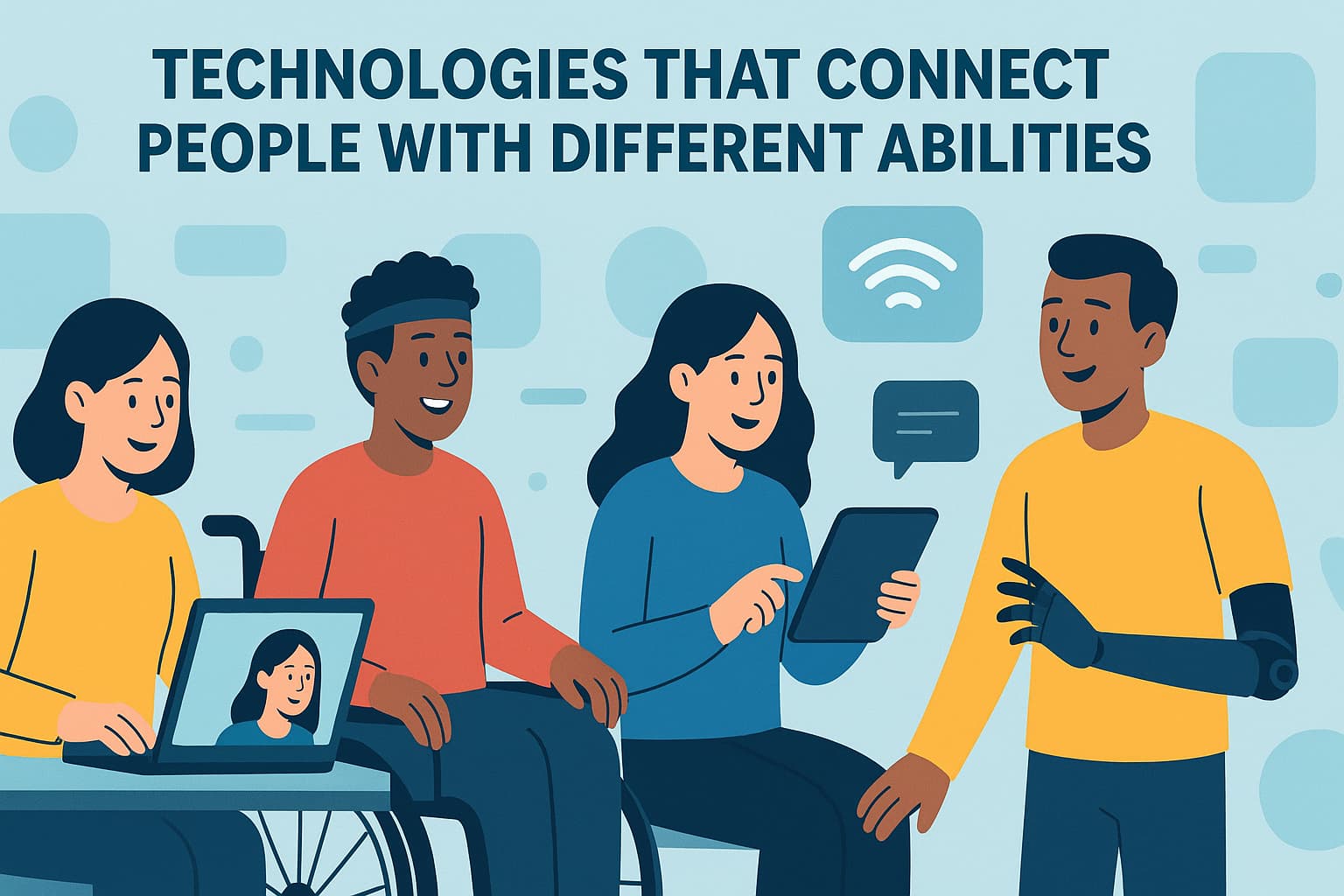
Discover how innovative technologies are bridging gaps and connecting people with different abilities. Explore assistive technologies, inclusive design, and digital accessibility solutions that create meaningful connections across diverse communities.
In our increasingly connected world, technology serves as a powerful bridge that transcends physical, cognitive, and sensory barriers. The evolution of assistive and inclusive technologies has fundamentally transformed how people with different abilities interact, communicate, and participate in society. These innovations don’t merely accommodate differences—they celebrate and leverage the unique perspectives and capabilities that diversity brings to our communities.
Understanding the Landscape of Inclusive Technology
The concept of inclusive technology extends far beyond traditional assistive devices. Modern inclusive design principles recognize that creating solutions for people with disabilities often results in innovations that benefit everyone. This universal design approach has led to breakthrough technologies that connect individuals across a spectrum of abilities, fostering collaboration, understanding, and shared experiences.
The global disability community represents over one billion people worldwide, making it one of the largest minority groups on Earth. When we consider the broader definition of different abilities—including temporary disabilities, age-related changes, and situational limitations—virtually everyone benefits from inclusive technological solutions at some point in their lives.
Communication Technologies Breaking Down Barriers
Real-Time Translation and Interpretation Systems
Advanced artificial intelligence has revolutionized communication for people with hearing impairments and those who communicate through sign language. Modern real-time interpretation systems can instantly convert spoken language to text, sign language to speech, and facilitate multilingual conversations. These systems utilize machine learning algorithms trained on vast datasets of sign language gestures, enabling accurate translation across different sign language dialects and spoken languages.
The integration of computer vision and natural language processing has made it possible for deaf and hard-of-hearing individuals to participate seamlessly in video conferences, educational settings, and social gatherings. Mobile applications now provide instant captioning services, while smart glasses can display real-time transcriptions directly in the user’s field of vision.
Voice Recognition and Synthesis Technologies
For individuals with speech impairments or those who are non-speaking, advanced voice synthesis technologies offer unprecedented communication opportunities. Modern text-to-speech systems can generate natural-sounding voices that reflect the user’s personality and preferences. Some systems even allow users to bank their own voice before losing the ability to speak, preserving their unique vocal identity.
Eye-tracking and brain-computer interface technologies have opened new frontiers for individuals with severe motor impairments. These systems enable users to compose messages, control devices, and engage in conversations using only their eye movements or neural signals. The precision and speed of these technologies continue to improve, making communication more natural and efficient.
Mobility and Navigation Solutions
Smart Navigation Systems
GPS-enabled navigation systems specifically designed for people with visual impairments have transformed independent mobility. These systems provide detailed audio descriptions of surroundings, obstacle detection, and route optimization based on accessibility features. Integration with smart city infrastructure allows these systems to communicate with traffic signals, public transportation systems, and building access points.
Indoor navigation presents unique challenges that innovative technologies are addressing through beacon-based systems, augmented reality applications, and crowdsourced accessibility mapping. Users can navigate complex environments like hospitals, universities, and shopping centers with confidence, receiving turn-by-turn directions and important accessibility information.
Adaptive Transportation Technologies
The emergence of autonomous vehicles presents exciting possibilities for individuals with various mobility challenges. Self-driving cars equipped with adaptive controls can accommodate users with different physical abilities, while ride-sharing platforms are beginning to integrate accessibility features that match users with appropriate vehicle types and trained drivers.
Public transportation systems worldwide are adopting smart technologies that provide real-time accessibility information, including elevator status, platform conditions, and crowding levels. Mobile applications allow users to plan routes that consider their specific mobility needs and preferences.
Cognitive and Learning Support Technologies
Adaptive Learning Platforms
Educational technology has evolved to support diverse learning styles and cognitive abilities through adaptive algorithms that personalize content delivery, pacing, and assessment methods. These platforms recognize that intelligence manifests in multiple forms and adapt to each learner’s unique cognitive profile.
Memory support applications help individuals with cognitive impairments maintain independence by providing medication reminders, appointment scheduling, and step-by-step guidance for daily tasks. These systems learn from user behavior and preferences, becoming more effective over time while respecting privacy and autonomy.
Cognitive Enhancement Tools
Brain training applications and cognitive rehabilitation software provide targeted exercises designed to strengthen specific cognitive functions. These tools are particularly valuable for individuals recovering from brain injuries, managing neurodegenerative conditions, or seeking to optimize their cognitive performance.
Virtual and augmented reality environments offer safe spaces for skill development, social interaction practice, and exposure therapy. These immersive technologies can simulate real-world scenarios while providing appropriate support and feedback, making learning and adaptation more engaging and effective.
Social Connection and Community Building
Virtual Reality Social Spaces
Virtual reality platforms are creating unprecedented opportunities for social interaction among people with different abilities. These digital environments remove many physical barriers while enabling users to express themselves through customizable avatars and adaptive interaction methods. Users can attend virtual events, participate in shared activities, and form meaningful relationships regardless of their physical location or mobility limitations.
The haptic feedback capabilities of modern VR systems allow for tactile experiences that can be particularly meaningful for individuals with visual impairments. Virtual museums, concerts, and social gatherings become accessible through multi-sensory experiences that engage multiple senses simultaneously.
Online Community Platforms
Specialized social platforms designed with accessibility in mind are fostering communities where people with similar experiences can connect, share resources, and provide mutual support. These platforms incorporate features like screen reader compatibility, customizable interfaces, and alternative input methods to ensure universal accessibility.
Peer-to-peer learning networks allow individuals with different abilities to share their expertise and learn from one another. Someone with excellent visual-spatial skills might teach navigation techniques, while another person shares communication strategies or adaptive technology tips.
Workplace Integration Technologies
Adaptive Workplace Solutions
Modern workplace technologies are breaking down employment barriers by providing adaptive solutions that enable people with different abilities to perform at their full potential. Screen reading software, voice recognition systems, and ergonomic adaptations allow employees to contribute effectively regardless of their physical or sensory capabilities.
Cloud-based collaboration tools with built-in accessibility features enable teams to work together seamlessly, with automatic captioning for video calls, document accessibility checking, and customizable user interfaces. These tools recognize that diverse teams often produce more innovative and comprehensive solutions.
Remote Work Technologies
The shift toward remote work has highlighted the importance of inclusive technology design. Video conferencing platforms now include automatic transcription, sign language interpretation windows, and customizable display options. Project management tools incorporate accessibility features that support different work styles and cognitive preferences.
Healthcare and Wellness Technologies
Telemedicine and Remote Monitoring
Healthcare technology has become increasingly accessible, with telemedicine platforms designed to accommodate users with various disabilities. Video consultation systems include sign language interpretation, text-based communication options, and adaptive interfaces that work with assistive technologies.
Remote monitoring devices help individuals with chronic conditions maintain their health while preserving independence. These systems can detect changes in vital signs, medication adherence, and activity levels, alerting healthcare providers or family members when intervention may be needed.
Mental Health and Wellness Apps
Digital mental health platforms are incorporating accessibility features to serve users with different cognitive and emotional needs. These applications provide customizable interfaces, multiple communication modalities, and personalized support strategies that adapt to individual preferences and capabilities.
Mindfulness and meditation applications now include features for users with different sensory abilities, offering audio descriptions for visual content, haptic feedback for timing cues, and customizable sensory experiences that accommodate various neurological differences.
Gaming and Entertainment Accessibility
Inclusive Gaming Technologies
The gaming industry has made significant strides in creating inclusive experiences that connect players with different abilities. Adaptive controllers, customizable input methods, and comprehensive accessibility options enable players to enjoy games regardless of their physical or sensory capabilities.
Cooperative gaming experiences are particularly powerful in connecting people with different abilities, as players can contribute their unique skills and perspectives to achieve shared goals. These games often highlight how diversity of abilities can be a strategic advantage rather than a limitation.
Accessible Entertainment Platforms
Streaming services and entertainment platforms are incorporating comprehensive accessibility features, including audio descriptions, customizable subtitles, and alternative navigation methods. These features enable people with different abilities to enjoy content together and participate in shared cultural experiences.
Emerging Technologies and Future Possibilities
Artificial Intelligence and Machine Learning
The rapid advancement of artificial intelligence is opening new possibilities for inclusive technology. Machine learning algorithms can adapt to individual users’ needs and preferences, creating personalized experiences that evolve over time. Natural language processing enables more intuitive human-computer interaction, while computer vision technologies can interpret and respond to non-verbal communication methods.
Brain-computer interfaces represent the frontier of inclusive technology, potentially enabling direct neural control of devices and systems. While still in early stages, these technologies promise to eliminate many current barriers to digital interaction and communication.
Internet of Things and Smart Environments
The proliferation of connected devices is creating smart environments that can automatically adapt to users’ needs and preferences. Smart homes can adjust lighting, temperature, and accessibility features based on the occupants’ requirements, while public spaces are beginning to incorporate similar adaptive technologies.
These interconnected systems can learn from user behavior and preferences, creating environments that anticipate needs and remove barriers proactively rather than reactively.
Challenges and Considerations
While technological advancement offers tremendous promise, several challenges must be addressed to ensure truly inclusive innovation. Privacy and security concerns are particularly important when dealing with assistive technologies that may collect sensitive personal information. Users must have confidence that their data will be protected and used ethically.
The digital divide remains a significant barrier to accessing inclusive technologies. Economic factors, geographic location, and technological literacy can prevent people from benefiting from available innovations. Addressing these disparities requires coordinated efforts from technology developers, policymakers, and community organizations.
Standardization and interoperability present ongoing challenges as different technologies and platforms must work together seamlessly. Universal design principles should guide development from the earliest stages rather than being added as an afterthought.
The Path Forward
The future of inclusive technology lies in continued collaboration between people with different abilities, technology developers, researchers, and policymakers. User-centered design approaches that involve people with disabilities throughout the development process ensure that solutions truly meet real-world needs and preferences.
Investment in research and development specifically focused on inclusive technology is essential for continued progress. This includes funding for basic research, applied development, and large-scale implementation studies that demonstrate the effectiveness and impact of these technologies.
Education and awareness initiatives help create a more inclusive society by highlighting the capabilities and contributions of people with different abilities. As more people understand the value of diversity and inclusion, demand for inclusive technologies will continue to grow.
Conclusion
Technologies that connect people with different abilities represent more than just accommodations or adaptations—they embody a fundamental shift toward recognizing and celebrating human diversity. These innovations demonstrate that inclusion benefits everyone by creating more flexible, intuitive, and powerful solutions to common challenges.
As we continue to develop and deploy inclusive technologies, we move closer to a world where ability differences become sources of strength rather than barriers to participation. The ongoing evolution of assistive and inclusive technologies promises to unlock human potential in ways we are only beginning to imagine.
The success of these technologies ultimately depends on our collective commitment to creating an inclusive society where everyone can contribute their unique talents and perspectives. By embracing diversity and investing in inclusive innovation, we build bridges that connect not just technologies, but hearts, minds, and communities across all spectrums of human ability.
Through continued collaboration, innovation, and advocacy, we can ensure that technology serves as a force for inclusion, connection, and empowerment for people of all abilities. The future is not just accessible—it is enhanced by the rich diversity of human experience and capability.